Isn’t it everyone’s dream today to have a house of their own? In this modern era, everyone is desperate to get their hands on a property that belongs to them. Particularly for Gen Z, owning a house at the earliest is a very common dream. Considering how this generation is always looking for calmness and tranquility, nothing could be better than to own a place which has no disturbances and no presence of anyone around, especially parents. Home is no longer about status; it’s about having the best place to keep our sanity in check. This is why Gen Zers are saving hard and doing side work just to get their homes as soon as possible.
It is really relaxing once you get back after a long tiring day outdoors after spending your time on a tedious corporate job, or any other energy-sapping activity. The first thing that you would to do is to come home to a haven where you will be able to enjoy silence away from to noisy world outside, isn’t it? Think about coming back to your home. Closing the door behind you, and getting yourself prepared for some self-healing treatment. Whatever you might be doing drinking matcha or tea in your little backyard, soaking up in the afternoon air, or watching stars from your balcony at night , it is just great!
The Harsh Reality: Our Planet is Not Okay
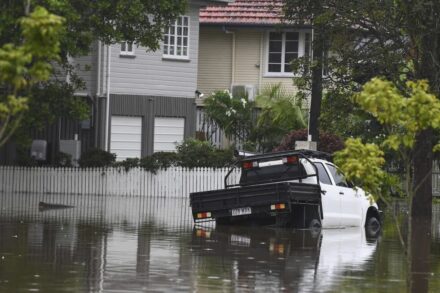
But then against, let us consider stepping back to have a broader perspective on things. As we observe the present world in which we life, it is evident that the earth is not in its prime form. With the fast-paced climate changes taking place, there is an increase in the frequency and severity of natural calamities. The usual climatic patterns that used to prevail in the past no longer exist. Heavy rains within just one day could leat to unprecedented flash flooding, and dry spells could result in soil movements.
And here lies the trap: you go to a real estate agency, and the representative gives you a charming smile and says, “o worries, this place will never flood. Our drainage system is great and we are high above the ground.” It seems comforting enough, but in an era of climate crisis, what we can never predict s the future. Historical facts don’t necessarily assure future protection anymore. Should a sudden and unexpected flash flood come out of nowhere, and wash away your nicely decorate home, you’ll suffer from an immense heartache. It’s not only because of the damage that as caused; it’s because you see the result of hard work of your life, your first ever property, getting destroyed in a few hours due to the flood.
Luckily, some of these young property owners have started to realize the harsh truth. In order to safeguard themself from any loss or damage, they end to opt for the most sensible way out: buying property insurance. Is this enough?
Hold On, Don’t Just Rely on a Financial Safety Net!
Before getting into the thick and thin of insurance policies and premiums, there is one aspect which is very often forgotten: Climate Risk Mitigation.
The point is, insurance is your security cushion in case something happens to you. It helps you to get back on track, but it won’t protect your home from being flooded with water on your roof from being blown away by winds. Before we even consider signing an insurance policy, we have a basic task of securing our houses physically. We can treat it as a two – level protection – mitigation is your shield and insurance is your secondary protection.
physical climate risk management measures need not necessarily be overly elaborate government operations but should begin with something practical enough for you to undertake yourself:
Geographical & Climate Sensibility: As ou search for property, conduct independent research. Do not only rely on the brochure but check for the geographical location’s history on digital satellite maps and historical weather statistics while asking the locals or warungs owners in the vicinity for any climate-based issues they might have encountered within the last ten years.
Adaptive House Construction: In case you are constructing or renovating your house, incorporate adaption into your house’s construction. Raise electrical outlets and fuse boxes high from the conventional floor level to prevent water from causing extreme damage in case water suddenly pools indoors. Not only that but install biopore soakaway holes and French drain around your house to ensure better water drainage when there is sudden rainfall.
Resilience of Structure and Maintenance: You should regularly check your roof to make sure that it is capable of withstanding high velocity winds. Always keep your surroundings gutters completely free from debris. Spending some amount of money and effort on making your walls wate-proof and strengthening your roof today can save you millions of dollars tomorrow.
Myth vs. Fact: Don’t Get Trapped by the Word “Standard”
When you are done mitigating physical and your home becomes as resilient as it can be, then comes the next part of insuring financially. Herein lies the key issue that causes much confusion among countless first-time homeowners, which is he false of total coverage.
Homeowners are often under the wrong impression that once their home is covered by insurance, then there will not be any other disaster that can affect them. Sadly, this is not the case because insurance covers are very specialized. Mostly, the average buyer gets coverage under the Standard Property/Home Insurance coverage (also known in Indonesia as Polis Standar Asuransi Kebakaran Indonesia or PSAKI).
Do you really believe hat a basic policy can protect your property in case of a disastrous weather event? No way! It is never that easy. Basic property policies have their explicit scope of coverage. Basic property policies only provide coverage for the damage arising from FLEXAS:
F ire (Kebakaran)
L ightning (Petir)
E Xplosion (Ledakan)
X piation of a falling aircraft (Kejatuhan Pesawat Terbang)
Notice carefully. Is there any flood there? Is there any earthquake? Is there any landslide because of a heavy rain? No. If your property is destroyed due to flooding because of climate change, you will be left with nothing due the fact that you have a basic policy.
The Solution: Extension of Cover is Key
Well, how do you solve this colossal problem? In order to ensure your dream house is actually safe from any threats posed by modern climate risks, you will need to specifically demand the inclusion of an extension of cover (rider) to your main insurance policy. You cannot just sit back and expect it to happen!
In order to ensure protection from climate-inducted catastrophes, you should check out the following vital riders:
The TSFW Clause (Typhoon, Storm, Flood, Water Damage): Your ultimate solution if you reside in a flood or rainfall zone, this extension to your insurance policy covers damage resulting from extreme storms and typhoons and subsequent flooding.
The Earthquake Clause: Geographically unstable regions pose additional dangers if the region experiences climate risks. Protection from earthquakes, volcanic eruptions, and subsequent landslides will save you financially from any ground shifts.
Obviously, adding such extensions will most definitely cost you a little extra cash. The amount you’ll pay as your premium (monthly/annual) will rise based on the level of risk associated with your zone. But it’s totally worth it!
The this is, paying a little extra every month for the premium is better that the devastating financial blow that comes from having to spend hundreds of millions of dollars yourself to rebuild your home from the ground up. In personal finances there is one simple but very important ole to remember: “ Always insure enough to rebuild your home completely, not just enough to cover what you owe.”
At the end of the day, the goal of purchasing disaster insurance is not to enrich yourself or earn any money when a disaster strikes. The goal is to provide protection for your assets and to ensure that you will not suffer from a catastrophic financial loss. We have worked way too hard, sacrificed way too much, and saved way too diligently to risk losing all our future savings because of one unpredictable climatic event. Through the combination of physical and insurance coverages, you will truly be able to secure your hard-won sanctuary for life.
What about your dream house? Is it really ready to deal with the challenges of current unpredictable climate risks, or are you using just a basic coverage policy?
Insurance costs have spiked
The cost is daunting for homeowners and the insurance industry alike. From 2017 to 2022, home insurance premiums rose 40% faster than inflation, according to a report by the Bipartisan Policy Center. An analysis by Realtor.com found that nationwide, taxes and insurance make up more than half of the monthly mortgage payment for 9% of single-family mortgages. That is more than double than the 4% in that circumstance at the end of 2014.
The high cost of housing has delivered a double-whammy to hopeful homeowners: while insurance prices rose 74% from 2008 to 2024, home prices increased 40% during the same period, according to the Joint Center for Housing Studies at Harvard University, making it harder to realize the dream of home ownership.
“Climate change has become a major cost-of-living issue for families across the country,” the Senate Budget Committee wrote.
Insurance companies, meanwhile, face a cash problem of their own because of climate-driven disasters. Some insurance companies have announced they will leave certain markets because it’s too expensive to cover homeowners in areas with a high risk of natural disasters. Losses paid out due to natural disasters rose from $30.8 billion in 2013 to $79.6 billion in 2023, peaking at $116.1 billion in 2017, according to the report by the Bipartisan Policy Center. Rising home costs mean it’s also more expensive for insurers to rebuild.
High insurance costs also prompt households to reduce their coverage, for example by insuring only enough to protect the mortgage lender, while leaving their own equity in the home unprotected, said Harvard Business School professor Ishita Sen, who studies insurance markets. That means they might not be able to afford to rebuild if their homes are destroyed in a storm. If people move away from that area because it is particularly vulnerable to storms, those local economies will suffer or die as a result.
“In extreme scenarios, some households may end up defaulting on their mortgages when insurance costs rise a lot,” Sen said. “If these numbers rise substantially over the year, it could precipitate a crisis.”
Climate events on the rise
The number of weather events that produce significant damage is also rising. In 2024, there were 27 weather/climate events in the United States with $1 billion or more in losses, according to the National Oceanic and Atmospheric Administration. The total cost was a staggering $182.7 billion.
Damage to homes from extreme weather events may be exacerbated by an aging housing stock. The average age of a home in the United States is 40 years old, according to the U.S. Census Bureau. Many of these homes may be less resilient to certain threats, such as wildfires.
Most lenders require homeowners to have insurance to obtain a mortgage. Yet, with insurance costs rising, many who cannot find insurance on the private market have signed up with the insurers of last resort, known as Fair Access to Insurance Requirements (FAIR) programs. About two-thirds of states have these plans, which are state-mandated but operated privately.
The number of FAIR residential policies has doubled since 2018, a sign of trouble in the private market. They often charge higher prices and offer more limited coverage than private plans.
Can states fix the insurance market?
States — which each have different insurance regulations — are searching for ways to bring down prices, while also strengthening building regulations and encouraging “home hardening” against extreme weather. But so far, climate and industry specialists say, government officials are not taking the one action that could make a big difference in the long-term: restricting building in vulnerable areas.
Home insurance was not originally meant to address broad catastrophic events, Glendon said.
“Society has to figure out what to do about those risks, not expect insurance to solve them,” he said. “Instead of trying to regulate or deal with the insurance industry, what we really need to be doing is maybe reconsidering where we live and build, and make buildings that are more resilient, if it’s possible.”
States have also been trying to fix deficiencies in their insurance markets. But the efforts may not work, given the escalation of climate-driven natural disasters and the varying rules in individual states, some of which strictly regulate the insurance industry and some of which are more lax.
Sen said these variations in regulation have distorted insurance premiums across the U.S. For example, insurers operating in states with strict rate regulations—such as California—offset their losses by raising premiums in less-regulated states like Virginia or New Hampshire instead of doing so locally.
“There’s an incentive to build more and more in risky areas,” because the costs are shifted elsewhere, Sen said.
Accurate pricing could discourage people from moving to areas with high climate risk, she said. Lower populations in those areas would reduce future losses and devastation caused by natural disasters.”
Higher-priced insurance in high-risk areas could motivate homeowners to reduce risk by taking actions to harden their homes against extreme weather events, according to Sen. That could include installing hurricane-resistant windows or using fire-resistant materials for roofs and fences.
A tale of two states
Florida and California have been hit hardest by climate-related natural disasters (hurricanes in the former and wildfires in the latter). Each state took different paths to find itself in an insurance crisis and each is trying different solutions to solve it.
In Florida, homeowners pay the highest rates in the nation, an average price of $15,000. By contrast Californians are projected to pay about $2,900, which is below the nationwide average, according to Insurify, a virtual insurance company. Yet both states have seen major insurers withdraw from the market or decline to write new policies.
In 2023, Farmers Insurance left the Florida market, leaving 100,000 customers without insurance. California has been hit especially hard, with seven out of 12 major carriers leaving or reducing coverage since 2022, according to the California Public Policy Institute.
“People aren’t just shopping for insurance—they are hunting for it,” said California Insurance Commissioner Ricardo Lara at a Sacramento conference on the insurance crisis earlier this year.
The situation in California did not develop overnight. A 1988 California ballot initiative required state approval for rate increases in the property market and created an elected insurance commissioner who faced pressure to keep rates low.
“We have old regulations that do not allow insurance companies to keep up with the costs they face to run their businesses,” Rex Frasier, president of the Personal Insurance Federation of California, a statewide industry group, said at the conference.
Lara explained that he inherited outdated rules and is implementing new regulations. One allows California insurance companies to use catastrophe modeling to seek price increases instead of relying strictly on data from the past. Another requires companies that do business in California to write policies in highly distressed areas.
In Florida, the industry was hit with a fast-rising cost of reinsurance and a high incidence of litigation. The Florida legislature responded with a law barring attorney fees from becoming part of a settlement, thus reducing the incentive for lawyers to take such cases. That and other insurance reforms have dramatically slowed the rate of increase in insurance premiums, according to Gov. Ron DeSantis’s office.
Florida is also increasing options for homeowners by allowing smaller, less capitalized companies to enter the market, although critics point out that several of those companies have failed in recent years.
Both states are taking steps toward home hardening. California requires insurers to give discounts for actions such as installing fire-resistant roofs and removing vegetation. Florida’s My Safe Florida Home program offers matching grants to homeowners for replacing roofs and windows.
Neither state, however, is taking big steps toward restricting building in high-risk zones. It’s politically unpopular and those decisions are made mostly by local governments.
“How are we going to get people together to decide what the new norms are, the new standards are, the new expectations are?” Glendon said. “That’s not an insurance problem. That’s a societal problem.”